What Paperwork Do I Need to Trade In My Car – learn here the required documents, avoid delays, and use our quick checklist to trade in smoother and get top value.
Trading in your car is an easier process if you have the right paperwork. The correct documents help the process move smoothly without delays. It is easier to get a fair value for your vehicle. This article explains what you need and how to prepare.
What Is a Trade-In Car?
A trade in car is a vehicle that a customer gives to a dealership as part of the payment for another car, either new or used car.
- The trade-in value is subtracted from the price of the new car.
- This reduces the total cost and the amount you need to finance.
- Dealers value a trade-in based on its age, condition, and market value.
This process can help you to buy your next car for less money.
What Paperwork Do I Need to Trade In My Car?
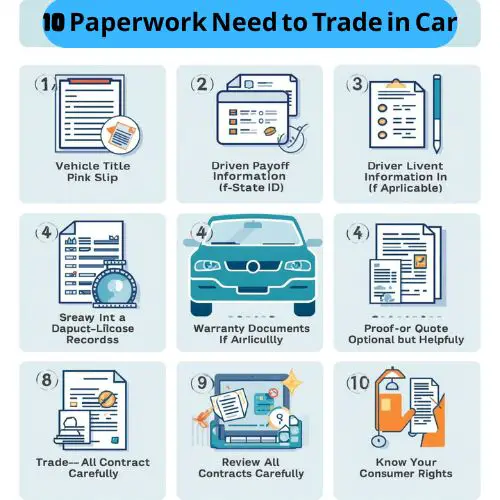
Here are 10 important pieces of paperwork that you need to trade in your car.
1. Vehicle Title (Pink Slip)
Your vehicle title proves that you are the legal owner of the car. The dealership cannot transfer ownership without it.
- If the title is lost or misplaced, visit your local DMV and request a duplicate before your trade in appointment.
- If you still owe money on your car loan, your lender usually holds the title. The dealership will contact the lender and pay off the remaining balance directly.
2. Vehicle Registration
Dealers often require a valid registration to confirm that:
- The car is legally registered, and
- You are the genuine owner.
This document also lists your car’s VIN (Vehicle Identification Number). The VIN helps the dealer complete all trade in forms accurately and quickly.
3. Driver’s License or State ID
You must show a driver’s license or state-issued ID card.
This:
- Confirms your identity, and
- You should ensure all legal documents, such as the bill of sale and title transfer are filled correctly.
If someone else is trading in the car for you. They will need a Power of Attorney (POA) which allows them to sign documents on your behalf.
4. Loan Payoff Information (If Applicable)
If you are still making loan payments on your car, you need to bring:
- Your loan account number, and
- The current payoff amount.
Dealers use this to:
- Compare the trade-in value to the remaining balance, and
- Handle the payoff directly with your lender.
This makes the process simple for you and avoids any confusion.
5. Vehicle Service Records
Car service and maintenance records are not required, but they can help increase your trade-in value.
Useful records include:
- Oil change receipts
- Repair invoices
- Routine maintenance history
These show that your car has been properly maintained. A well maintained car is easier for the dealer to resell and also they may offer you more money for it.
6. Warranty Documents (If Applicable)
Tell the dealer if your car is still covered by:
- A factory warranty, or
- An extended warranty.
If the warranty is transferable to the next owner:
- It can make your car more attractive, and
- It may raise the trade-in value.
You bring your warranty agreement and make sure that all terms and dates are clear.
7. Proof of Insurance
Bring a copy of your auto insurance card or policy.
Some dealers may:
- Ask for proof that the car is currently insured before finalizing the deal.
This is a simple document but useful to have ready.
8. Trade-In Offer or Quote (Optional but Helpful)
Before visiting a dealership, you can get an online trade in to estimate the trade value from trusted sites such as:
- Kelley Blue Book (KBB)
- Edmunds
- CARFAX
These tools help you:
- Understand your car’s market value, and
- Negotiate a fair trade-in price.
Print the quote or save it on your phone and bring it with you.
9. Review All Contracts Carefully
When you receive a purchase agreement or trade-in contract, read it slowly and carefully.
Make sure that:
- The trade-in value matches the amount you agreed on
- The loan payoff balance (if you have a loan) is correct
- Any conditions, fees, or deductions are clearly written
This step protects you from hidden fees, any mistakes or unpleasant surprises later.
10. Know Your Consumer Rights
You learn the basics of your state’s consumer protection laws before you finalize your trade-in. For example, in some places, laws similar to California’s Car Buyer’s Bill of Rights require:
- Clear pricing
- Transparent financing and fee details
Knowing your rights:
- Gives you more confidence, and
- Helps protect you from unfair or dishonest dealership tactics.
Quick Checklist: Documents You will Need
Use this quick list when you prepare for your trade-in:
- Vehicle title (pink slip)
- Vehicle registration
- Driver’s license or state ID
- Loan payoff information (if you still owe money)
- Vehicle service records (optional but helpful)
- Warranty documents (if under warranty)
- Proof of insurance
- Trade-in quote or appraisal (optional)
- Time to review all contracts carefully
- Basic knowledge of your consumer rights
Extra Tips for a Smooth Trade-In
A few extra steps can improve your trade-in experience:
- Clean your car inside and outside before the appraisal—a good appearance can boost value.
- Bring all keys and key fobs—missing keys can reduce your offer.

Remove personal items and data:
- Clear items from the glove box, trunk, and seats
- Delete phone contacts, navigation history, and apps from the car’s infotainment system
Knowing your car’s true market worth is your strongest tool when you negotiate.
Final Thought
Trading in your car does not have to be difficult.
With:
- The right paperwork
- Some basic planning, and
- A clear idea of your car’s value
You can:
- Get a better deal.
- Save time, and
- Avoid delays and confusion.
Ensure you have your papers ready ahead of time and go into the process with confidence. You’ll be well on your way to getting behind the controls of your next car.
The Next Road (thenextroad.com) is an affiliate of the Amazon Services LLC Associates Program, so you can access the Amazon marketplace when on this domain. We will earn a commission from your qualified purchases.